Treatment
Robotic Surgery
Robotic surgery in Gynaecology : Precision and enhanced Outcomes
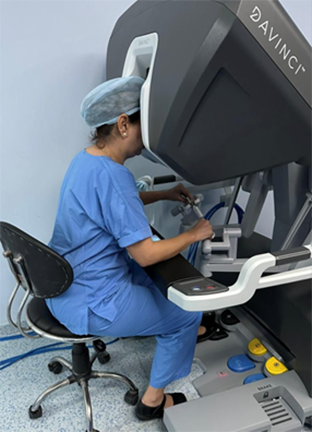
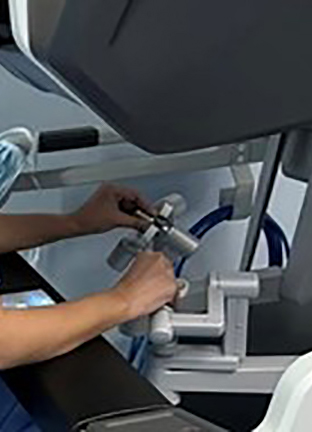
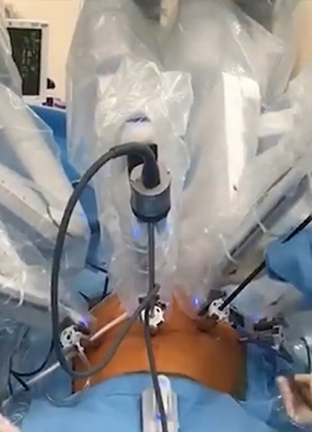
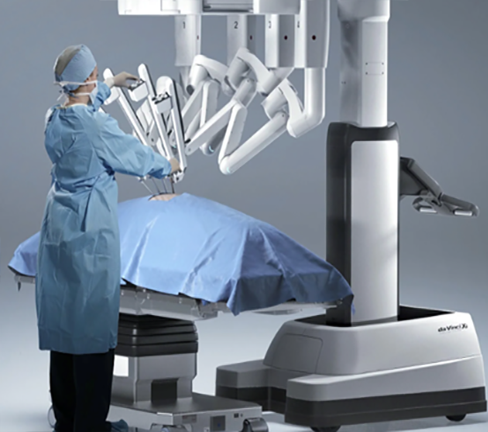
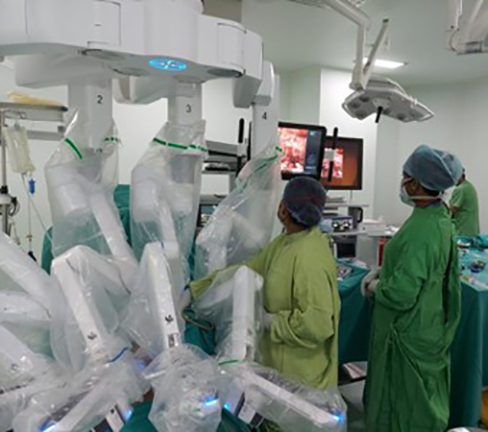
Robotic surgery involves use of the da Vinci robot surgical unit in performing complex surgeries. Although Robot is used in multiple specialities for minimal invasive surgeries, Gynaecological and Gynae oncological surgical procedures are rising to global prominence. Gynaecological cancer surgeries in which Robot is used include surgical staging in endometrial cancer – Robotic hysterectomy (removal of the uterus) with pelvic and paraaortic lymph node dissection and omental biopsy, benign gynaecological procedures like Robotic hysterectomy, Robotic Cystectomy, Robotic myomectomy. Other major Gynae-oncological procedures include Robotic cytoreductive surgeries for oligorecurrences in post chemotherapy for endometrial and ovarian cancers. This exciting technology allows the operating surgeon to sit comfortably behind a console and control the robot that is next to the patient to perform surgery. The operating surgeon sitting on master console is in complete control of robotic instruments attached to robotic arms that have been docked to ports placed in patient’s abdomen. An experienced assistant surgeon assists the console surgeon from the bedside.
When it comes to surgery, both patients and physicians tend to agree: minimally invasive techniques are preferred over traditional open surgery. These modern approaches offer a host of benefits — including less blood loss, reduced pain, smaller scars, shorter hospital stays, and faster recovery times.
But what happens when patients are given a choice between two minimally invasive options? That’s where things get interesting.
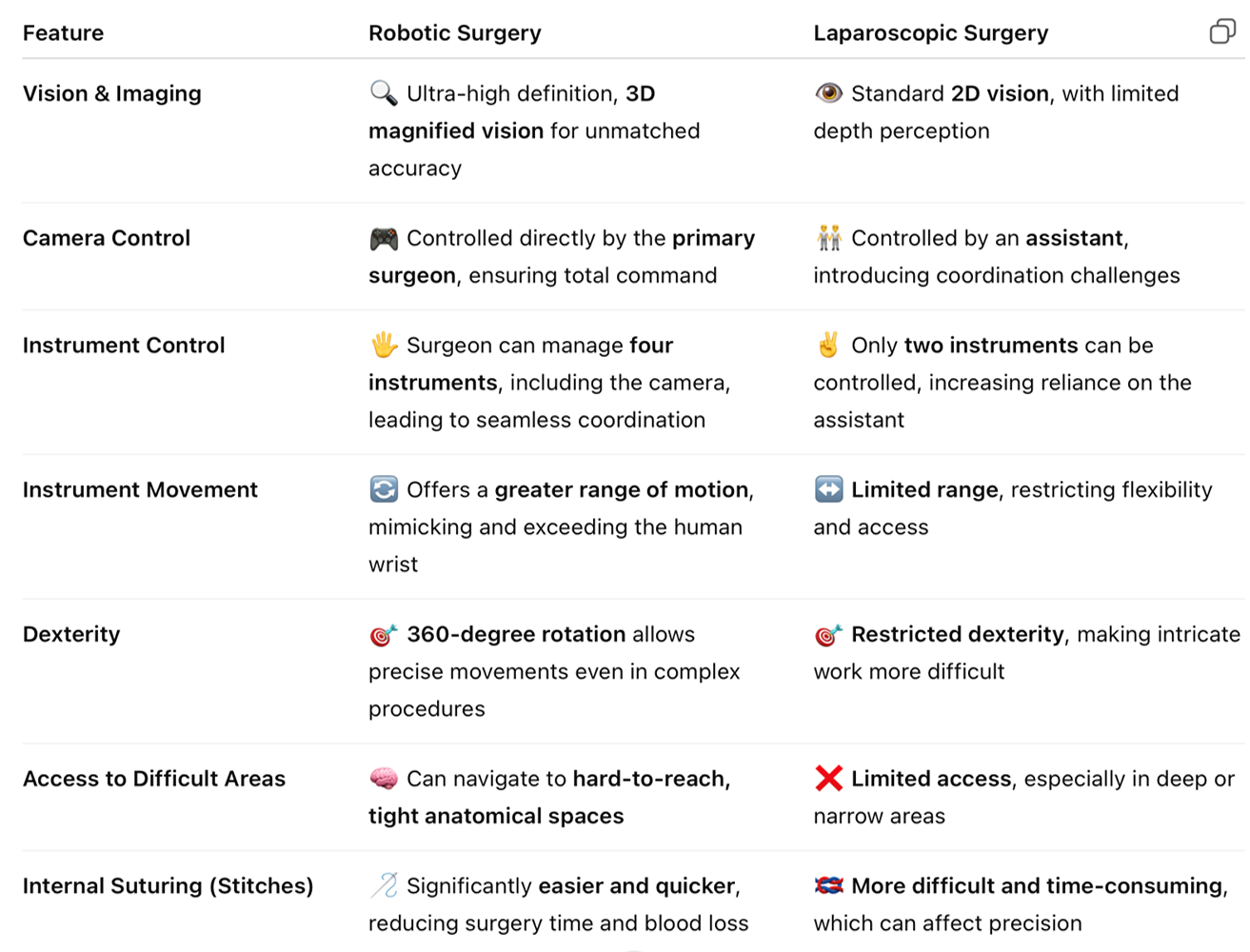
Today, patients and doctors often choose between laparoscopic surgery and the more advanced robotic surgery. While both techniques are less invasive than open surgery, robotic surgery offers a technological edge that’s hard to ignore.


When it comes to surgery, both patients and physicians tend to agree: minimally invasive techniques are preferred over traditional open surgery. These modern approaches offer a host of benefits — including less blood loss, reduced pain, smaller scars, shorter hospital stays, and faster recovery times.
But what happens when patients are given a choice between two minimally invasive options? That’s where things get interesting.
Today, patients and doctors often choose between laparoscopic surgery and the more advanced robotic surgery. While both techniques are less invasive than open surgery, robotic surgery offers a technological edge that’s hard to ignore.
Robotic Surgery vs. 🛠️ Laparoscopic Surgery: A Side-by-Side Look