
Treatment
Cervical Cancer
Cervical cancer is a disease where abnormal cells grow uncontrollably in the cervix, which is the lower part of the uterus connecting to the vagina. It usually develops slowly, often starting as precancerous changes in the cervix’s cells that can be detected and treated before turning into cancer
Most women who develop cervical cancer are between 20 and 50 years old. Cervical cancer is one of the main causes of death from cancer in India.
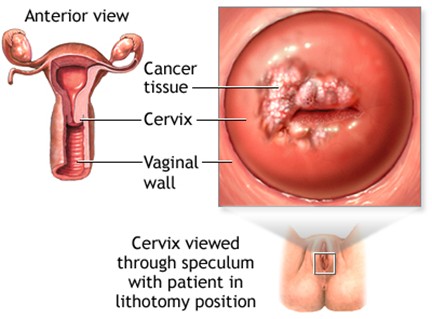
Causes of cervical cancer
Most cases of cervical cancer are caused by infection with various strains of the human papillomavirus, also called HPV. This infection is usually passed from person to person by sexual contact. When exposed to HPV, the immune system clears it before it is detected or causes cells to change, so most women with an HPV infection do not develop cervical cancer. In a small percentage of people, however, the virus survives for years, this PERSISTENT HPV infection contributes changes in cervical cancer cells leading to cervical cancer.
Risk factors for cervical cancer include:
- Age: The risk of cervical cancer increases with age. It is found most often in women over the age of 40. However, younger women often have precancerous lesions that require treatment to prevent cancer.
- Smoking and passive smoking: Cigarette smoke contains chemicals that damage the body’s cells. It increases the risk of precancerous changes in the cervix, especially in women with HPV.
- Sexual behavior: HPV is spread by sexual contact and is the cause of almost all cases of cervical cancer, as well as many vaginal and vulvar cancers. HPV may cause the cells in the cervix to change. If abnormal cells are not found and treated, they may become cancer. Certain types of sexual activity may increase the risk of getting HPV infection. These include:
- Multiple sexual partners
- High-risk male partners
- First intercourse at an early age
- Not using condoms during sex.
- Lack of regular Pap tests
- Having a sexually transmitted disease (STD), including chlamydia
- HIV infection
- Weakened immune system after an organ transplant due to immunosuppressants
Not everyone with risk factors gets cervical cancer. However, if a woman does have risk factors it’s a good idea to discuss them with a health care provider.
Prevention
To reduce your risk of cervical cancer:
- Practice safe sex. Reduce your risk of cervical cancer by taking measures to prevent sexually transmitted infections. This may include using a condom every time you have sex and limiting the number of sexual partners you have.
- Don’t smoke. If you don’t smoke, don’t start. If you do smoke, talk to a health care professional about ways to help you quit. You can reduce your risk of developing cervical cancer by having screening tests and receiving a vaccine that protects againstHPV
- Pap tests. Pap tests can detect precancerous conditions of the cervix. These conditions can be monitored or treated in order to prevent cervical cancer. Most medical organizations suggest beginning routine Pap tests at age 21 and repeating them every few years.
- HPV vaccine. Receiving a vaccination to prevent HPV infection may reduce your risk of cervical cancer and other HPV-related cancers. Ask your health care team if an HPV vaccine is right for you.
- Recommended Age:
- The best time for HPV vaccination is between 9-13 years of age, before girls and boys become sexually active. Gender-neutral vaccination has several advantages – faster elimination of infection through robust herd immunity, a more resilient programme, protection of boys against anal and oropharyngeal cancers and avoiding stigma associated with a girls-only vaccine.Having the HPV vaccine does not mean that you should not have regular Cervical Cancer Screening Tests. If you have been vaccinated against HPV, you should have your first screening at age 25 and then every five
Signs and symptoms
Precancerous changes in cervical cells rarely cause symptoms. The only way to know if there are abnormal cells that may develop into cancer is to have a cervical screening test. If early cell changes develop into cervical cancer, the most common signs include:
- vaginal bleeding between periods
- menstrual bleeding that is longer or heavier than usual
- pain during intercourse
- bleeding after intercourse
- pelvic pain
- a change in your vaginal discharge such as more discharge or it may have a strong or unusual colour or smell
- vaginal bleeding after menopause
These symptoms can be caused by other conditions but if you are worried or symptoms persist, contact your doctor. This is important for anyone with a cervix, whether you are straight, lesbian, gay bisexual or transgender.
Diagnosis
If your screenings come back as abnormal, your healthcare provider will want to run more tests to confirm you have cervical cancer. The first step in that is typically a colposcopy.
Colposcopy – A colposcope magnifies the cells of your cervix so your healthcare provider can see irregular cells. If the cells look suspicious or unusual, they’ll remove a sample of cervical cells and send them to a lab for further testing.
They can use any of the following methods to get a sample of tissue from your cervix:
- Punch biopsy: The tissue sample is removed from the cervix using biopsy forceps, an instrument used to grasp tissue firmly and remove it.
- Endocervical curettage: A tissue sample is scraped from an area just past the opening of the cervix using a curette (small, spoon-shaped instrument) or a thin, soft brush.
- Loop electrosurgical excision procedure (LEEP): In this the doctor uses an electrical wire loop to remove the abnormal cervical tissue.
- Cone biopsy: In this procedure the doctor removes a slightly larger, cone-shaped piece of tissue from your cervix so that the pathologist can see if abnormal cells are in the tissue beneath the surface of the cervix
If the results from these tests confirm cervical cancer, further tests will determine whether the disease has spread (metastasized). These tests might include
Cystoscopy or proctoscopy: If a woman is diagnosed with cervical cancer and her doctor thinks it may have spread, she may have a cystoscopy or proctoscopy or both. These tests use lighted tubes to view the inside of the bladder (cystoscopy) or the anus, rectum and lower colon (proctoscopy).
Imaging tests – which may include:
- CT (computed tomography) scans
- MRI (magnetic resonance imaging) scans
- PET (positron emission tomography) scans
- Chest X-ray
- Ultrasound
The results of these tests also help your healthcare provider stage the cancer. Cervical cancer ranges from Stage I (least severe) to Stage IV (most severe). Staging helps your healthcare provider determine the best treatment plan. If symptoms or Pap test results suggest precancerous cells or cervical cancer, the patient’s doctor will conduct an examination and ask questions about her health; lifestyle habits; and family medical history.
Treatment of Cervical Cancer
Treatment for cervical cancer is based on many factors, including
- Stage of the disease
- Age
- General health condition
- Wish to have future pregnancy
The treatments for cervical cancer are radiation, chemotherapy, surgery, targeted therapy and immunotherapy.
If you are pregnant, your therapy for cervical cancer depends on the stage of pregnancy and the stage of cervical cancer.
Surgery
Small precancerous lesions
The following procedures or surgeries may be used for precancerous lesions or cervical cancer that has not spread beyond the cervix:
- Cryosurgery(cryotherapy): A instrument freezes and destroys precancerous tissue.
- LEEP (loop electrosurgical excision procedure):Electrical current is passed through a thin wire hook to remove precancerous lesions.
- Cone:This procedure is the same as a cone biopsy that removes all the cancerous tissue. It may be used when the cancer is small, and the woman wants to preserve her uterus and plan future pregnancy.
- Hysterectomy:This operation removes the uterus and the cervix, but not the tissue next to the uterus. The vagina and nearby lymph nodes are not removed. The surgery may be done through the vagina or an incision (cut) in the abdomen. Minimally invasive laparoscopic surgery, sometimes with a robotic device, may be an option for some women with cervical cancer.
- Bilateral salpingo-oophorectomy:The fallopian tubes and ovaries are removed at the same time as the hysterectomy. If a woman is close to the age of menopause, her doctor may discuss removing her ovaries and fallopian tubes to reduce the chance the cervical cancer will come back in one of those organs.
Large cervical cancer lesions
These surgeries may be used for larger cervical cancer lesions if the cancer is only in the cervix. In addition to removing the cancer, the surgeon removes the sentinel lymph nodes, which are often key structures in the initial spread of cancer. Any patient who is a candidate for surgical resection of the cervix is also a candidate for sentinel lymph node biopsy as part of the procedure.
If the cancer has spread, doctors usually will recommend chemotherapy and radiation therapy.
- Trachelectomy:The cervix and surrounding tissue are surgically removed but not the uterus. This procedure sometimes is used for young women who have larger tumors (usually up to 2 centimeters) but wish to keep the ability to have children. Lymph nodes may be removed during surgery too. A cerclage or stitch is used to help support the base of the uterus. If more cancer is found during the surgery, a hysterectomy probably will be done. This is a highly specialized procedure that requires a great deal of skill on the part of the surgeon to be successful. Women considering this surgery should be sure the doctor performing it has a high level of experience in this procedure.
- Radical hysterectomy:The cervix, uterus, part of the vagina, the tissues surrounding the cervix (parametria) and nearby lymph nodes are removed. Depending on the patient’s age and the size of the tumor, she also may have a bilateral salpingo-oophorectomy (removal of the ovaries and fallopian tubes).
Other surgery types include:
- Pelvic exenteration:If cervical cancer returns after treatment, this complex surgery may be performed. Along with the organs and tissues removed in a radical hysterectomy, the bladder, vagina, rectum and part of the colon are removed.
- Laparoscopic retroperitoneal lymph node dissection:an advanced procedure that helps surgeons plan your surgery and determine how far the cancer has spread.
Radiation therapy
Radiation therapy uses powerful, focused beams of energy to kill cancer cells. There are several different radiation therapy techniques. Doctors can use these to accurately target a tumor while minimizing damage to healthy tissue.
Radiation therapy usually is used to treat cervical cancers that have spread beyond the cervix or very large lesions (larger than 4 cm). It may also be used instead of surgery. Sometimes it is necessary to deliver radiation therapy after surgery to treat cancer that has spread or to reduce the risk that a cancer will come back.
Two types of radiation therapy may be used to treat cervical cancer:
- Intensity modulated radiation therapy (IMRT) focuses multiple radiation beams of different intensities directly on the tumor for the highest possible dose.
- Brachytherapy delivers radiation therapy with small pieces of radioactive material (usually about the size of a grain of rice) that are placed on or inside the patient’s body as close to the tumor as possible. This allows doctors to deliver very high doses of radiation directly to the patient’s tumor while limiting radiation exposure to healthy tissue.
Internal radiation therapy implants deliver radiation via an applicator that is inserted through the vagina. The implants may be inserted under general anesthesia. High-dose treatment, which involves the delivery of brachytherapy treatment for a few minutes each time, may be done on an outpatient basis.
Chemotherapy
Chemotherapy drugs kill cancer cells, control their growth or relieve disease-related symptoms. Chemotherapy may involve a single drug or a combination of two or more drugs, depending on the type of cancer and how fast it is growing.
Targeted therapy
Targeted therapy uses drugs or other substances to block the action of specific enzymes, proteins, or other molecules involved in the growth and spread of cancer cells.
Targeted therapies used to treat cervical cancer include:
- Bevacizumab
- Tisotumab vedotin
Immunotherapy
Immunotherapy helps a person’s immune system fight cancer. Biomarker tests can be used to help predict response to certain immunotherapy drugs.
Pembrolizumab is an immunotherapy drug used to treat certain patients whose cervical cancer has the biomarker PD-L1